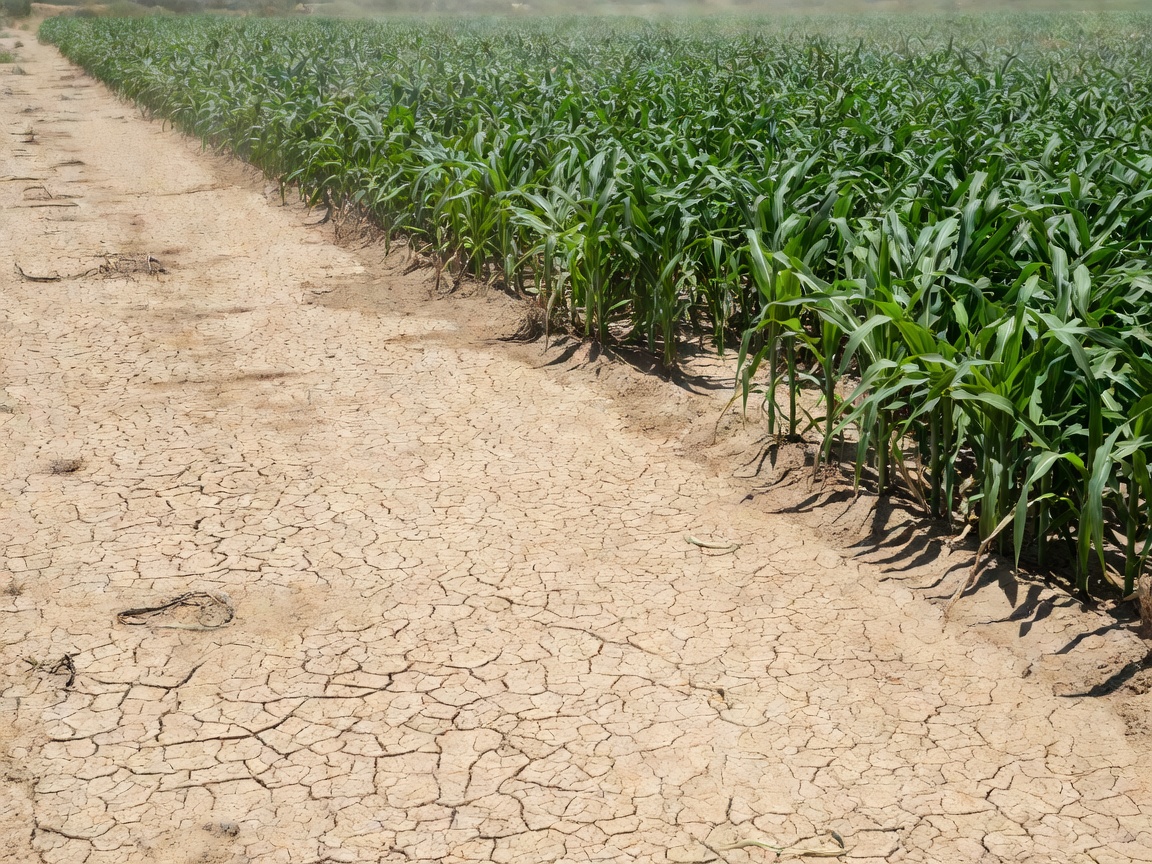
They fall into a few practical categories: tolerance to water stress, resistance to specific diseases, and — in animal aquaculture rather than crops — faster, more efficient growth. Some of this work is already approved and in commercial use; some is still in research trials. The common thread is that each trait targets a specific, named stress rather than promising general "climate-proofing," because breeding and gene editing work by addressing one mechanism at a time.
- Drought trait example
- Bacterial cspB gene in maize
- Disease trait method
- Gene silencing (RNA interference)
- US animal approval
- 2015, genetically engineered salmon
How does a drought-tolerant GM crop actually cope with less water?
One commercially grown approach, developed for maize grown in water-limited parts of the US Corn Belt, introduces a gene called cspB from the soil bacterium Bacillus subtilis, which helps the plant maintain normal cell function under water stress and supports steadier yield through short dry spells compared with non-tolerant varieties grown under the same conditions. It is not a trait that lets maize grow without water altogether — it narrows the yield gap during a dry stretch rather than removing the crop's water requirement, which is a distinction breeders are careful to keep in the trait's own technical description.
How are disease-resistant potatoes being engineered without inserting foreign genes?
J.R. Simplot's Innate line of potato varieties, approved for commercial growing in the United States, uses a gene-silencing technique — RNA interference — that switches down the plant's own genes involved in browning after bruising and, in later versions, improves resistance to late blight, a disease caused by the pathogen Phytophthora infestans that has affected potato crops for generations. Because the technique works by silencing existing potato genes rather than inserting DNA from another species, it sits closer to the gene-editing category described elsewhere on this site than to classic transgenic engineering, even though it predates CRISPR as a tool.
What is AquAdvantage salmon, and what does it show about where GM animals stand?
AquAdvantage salmon is an Atlantic salmon carrying a growth hormone gene from Chinook salmon, controlled by a promoter sequence from ocean pout, engineered so the fish reaches market size on a faster growth curve than farmed Atlantic salmon without the trait. The US Food and Drug Administration approved it for human consumption in 2015, making it the first genetically engineered animal cleared for food use in the United States, and Canadian regulators approved it as well. It remains a rare case rather than a template that has been widely repeated — GM approvals in food animals have stayed far less common than in crops, in part because animal breeding and welfare assessment raise a different set of regulatory questions than plant risk assessment does.
Where is research heading next, and what stays genuinely uncertain?
Public and university research groups are working on gene-edited disease resistance in staple grains — for example, wheat lines edited for reduced susceptibility to powdery mildew — and on further drought and heat-tolerance traits across maize, rice and other staples, often using the same targeted gene-editing approach described on this site's page about gene editing rather than transgenic insertion. What is genuinely uncertain is the pace at which any specific trait moves from a research trial to a variety a farmer can actually buy, since that depends on breeding the trait into locally adapted varieties and clearing whichever regulatory route applies in each country — steps that have taken years, sometimes decades, for the traits already on the market. Readers who want the current state of a specific variety's approval status are better served checking directly with the relevant national regulator than relying on any general summary, including this one.