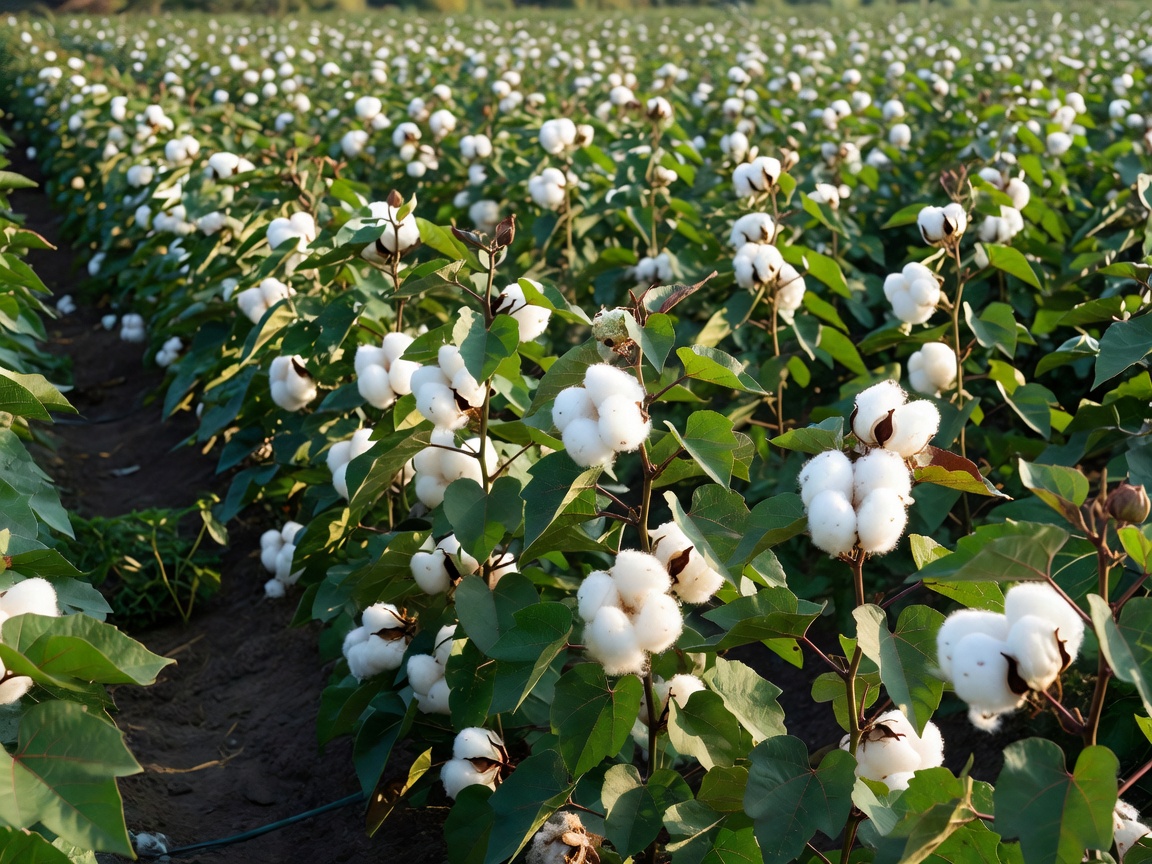
Bt crops carry a gene from the soil bacterium Bacillus thuringiensis that makes a protein toxic to the larvae of specific insects when they feed on the plant. Herbicide-tolerant crops carry a different kind of gene, one that lets the plant survive an application of a particular herbicide that would otherwise kill it along with the surrounding weeds. Between them, these two traits defined the first three decades of genetically modified agriculture, and they still account for most of the GM planted area worldwide.
- Bacterial source
- Bacillus thuringiensis
- First commercial approval
- United States, 1996
- Common host crops
- Maize, cotton, soybean
Which crops carry these traits, and since when?
Bt cotton and Bt maize, along with glyphosate-tolerant soybean, reached commercial fields in the United States in 1996, the year usually cited as the start of large-scale GM cultivation. Since then, Bt cotton has become widely grown in India, and Bt maize and herbicide-tolerant soybean are grown at scale across the United States, Brazil, Argentina and Canada. Many varieties now stack several traits together — for example, resistance to more than one insect pest combined with tolerance to more than one herbicide — so that a single seed line covers several management problems at once rather than one.
Why do the toxins in Bt crops only affect certain insects?
The Bt protein has to bind to a specific receptor in an insect's gut and be activated by the alkaline conditions found there before it becomes toxic. Target pests such as the European corn borer in maize or the cotton bollworm in cotton have guts suited to that activation step; most other organisms, including mammals, do not, which is the basic reason the protein is described as selective rather than broadly insecticidal. That selectivity is also why different Bt proteins are paired with different crops — a protein effective against a caterpillar pest of maize is not necessarily effective against a beetle pest of potatoes, so trait developers match the protein to the pest rather than treating "Bt" as one universal solution.
What stops pests from becoming resistant to the toxin?
Regulators including the US Environmental Protection Agency require growers of Bt crops to follow insect resistance management plans, the best known of which is refuge planting: growing a block of non-Bt plants near or within the Bt field so that susceptible insects survive and mate with any rare resistant individuals, diluting resistance genes in the population rather than letting them concentrate. Refuge requirements have not eliminated the problem everywhere — resistance in some pest populations, particularly certain cotton bollworm strains, has still been documented in parts of the world — which is one of the reasons trait developers now stack multiple Bt proteins with different modes of action in a single plant, on the reasoning that a pest would need to overcome more than one defence at once.
Why did herbicide tolerance change how farmers manage weeds?
Before herbicide-tolerant crops, farmers controlling weeds with a broad-spectrum herbicide had to apply it before the crop emerged, because a mature application would damage the crop along with the weeds. Glyphosate-tolerant soybean and maize let growers spray after the crop is up, controlling a wider window of weed emergence in a single pass and, for many growers, supporting reduced-tillage practices that leave more crop residue on the soil surface. The same convenience produced a downside: heavy, repeated reliance on one herbicide across huge planted areas has been followed by the emergence of glyphosate-resistant weed populations in several growing regions, which is why newer stacked varieties add tolerance to additional herbicides such as dicamba or 2,4-D rather than relying on glyphosate alone.
How does this fit with international trade rules?
Cross-border movement of living modified organisms, including seed for planting, is addressed by the Cartagena Protocol on Biosafety, an agreement under the Convention on Biological Diversity that requires an exporting country to give the importing country advance information and, in many cases, obtain agreement before a first shipment. Individual markets still diverge sharply on cultivation itself: the European Union has authorised very few GM varieties for cultivation on its own soil, while approving a much longer list of GM crops and derived ingredients for import as animal feed and food processing inputs, a split that reflects separate political and scientific assessment tracks rather than a single EU-wide judgement on the technology.